Cost to Spray Foam 1,000 Square Feet
At 2 inches of closed cell, 1,000 square feet is 2,000 board feet, or about $3,300 to $5,300. The same area in a 2x6 wall with open cell costs about $2,750 to $4,400, plus a vapour barrier.
Last updated September 2026
Most spray foam companies won't publish prices, which makes it hard to know whether a quote is fair. This guide gives you typical 2026 installed price ranges for the Guelph area, explains how spray foam is priced and shows worked examples for the projects we quote most often. There's also a calculator near the bottom of the page so you can estimate your own project in a few seconds.
These ranges reflect typical Ontario market pricing for professionally installed foam in 2026, including labour, material and standard prep. They don't include removal of old insulation, thermal barrier coatings or travel far outside our regular service area. Your written quote will be specific to your building, its access and its condition, and we update this page every year as material and labour costs change.
If you want to know what drives the number up or down, the section on price factors is the one to read, because two quotes for the same room can differ by thousands of dollars for good reasons or bad ones. And if a rebate could apply to your project, see our Ontario insulation rebates guide before you book. Everything else on this page is here to help you read any quote with confidence.
Typical installed prices in the Guelph area in 2026. Thicker foam and harder access move you toward the top of each range.
| Foam and thickness | Approx. R-value | Price per square foot |
|---|---|---|
| Closed cell at 1 in | R-6 | $1.65 to $2.65 |
| Closed cell at 2 in | R-12 | $3.30 to $5.30 |
| Closed cell at 3 in | R-18 | $4.95 to $7.95 |
| Open cell at 3.5 in (2x4 wall) | R-12 to R-13 | $1.75 to $2.80 |
| Open cell at 5.5 in (2x6 wall) | R-19 to R-21 | $2.75 to $4.40 |
| Job minimum | Not applicable | About $1,000 |
Spray foam is sold by the board foot, which is one square foot of foam at one inch thick. To find the board feet in a job, multiply the area by the thickness. Price per board foot times board feet gives the core cost.
Worked example: a basement with 900 square feet of wall at 2 inches of closed cell is 1,800 board feet. At $1.65 to $2.65 per board foot, that's about $2,970 to $4,770 before any extra prep or removal.
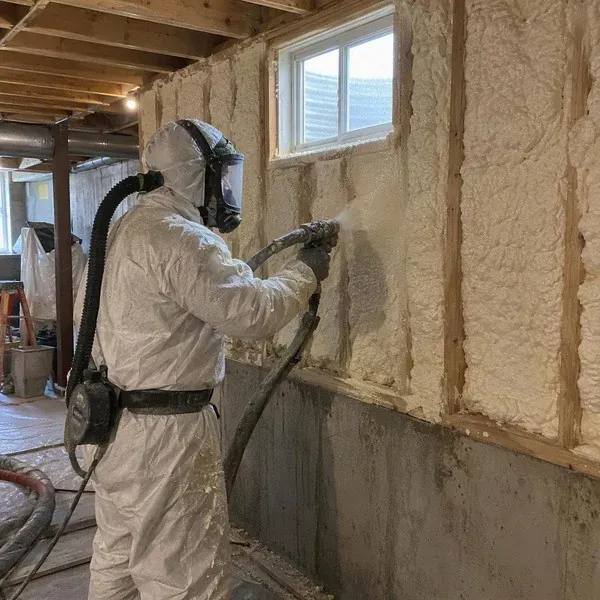
Typical 2026 ranges for the projects we quote most. Each is explained below.
| Project | Typical scope | Typical cost |
|---|---|---|
| 1,000 sq ft | 2 in closed cell | $3,300 to $5,300 |
| 20 x 20 garage | Walls and ceiling, 2 in closed cell | $3,100 to $4,900 |
| 24 x 24 garage | Walls and ceiling, 2 in closed cell | $4,100 to $6,500 |
| Basement walls | About 1,000 sq ft of wall, 2 in closed cell | $3,300 to $5,300 |
| Rim joists | Typical detached house | $1,000 to $2,000 |
| Attic floor | Air seal plus blown-in to R-60 | $2,000 to $4,500 |
| Pole barn 40 x 60 | Walls and roof, 1.5 in closed cell | $12,500 to $20,500 |
At 2 inches of closed cell, 1,000 square feet is 2,000 board feet, or about $3,300 to $5,300. The same area in a 2x6 wall with open cell costs about $2,750 to $4,400, plus a vapour barrier.
Walls and ceiling at 2 inches of closed cell run about $3,100 to $4,900 for a 20x20 and $4,100 to $6,500 for a 24x24, before drywall. See our garage insulation page.
A typical basement with about 1,000 square feet of foundation wall runs $3,300 to $5,300 at 2 inches. Removing old insulation and adding rim joists increases the total. See basement spray foam.
Most attics are best done with air sealing and blown-in, at about $2,000 to $4,500. Spraying the roofline with closed cell costs several times more because it takes 5 inches or more of foam, so it's reserved for attics that need it. See attic insulation.
A 40 x 60 pole barn with 14 ft walls, sprayed at 1.5 inches for condensation control, runs about $12,500 to $20,500. Heated shops at 2 to 3 inches cost more. See agricultural spray foam.
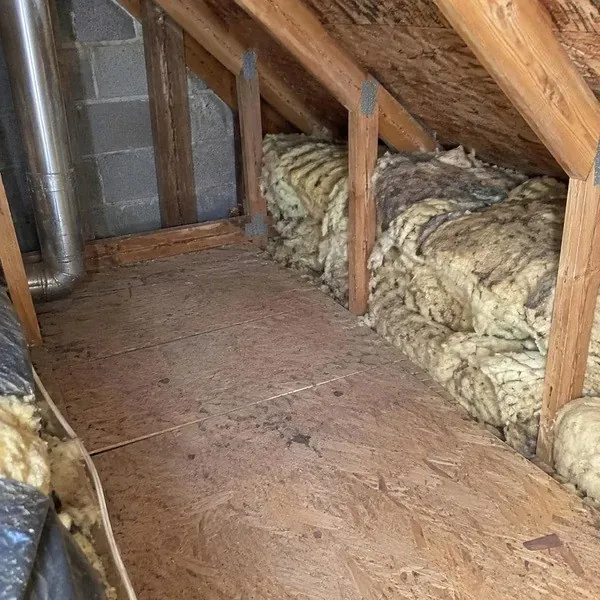
Upfront cost isn't the whole story. Air sealing is where spray foam earns back its higher price.
| Insulation | Relative upfront cost | Air seals | Best payback when |
|---|---|---|---|
| Closed cell spray foam | Highest | Yes | Basements, rim joists, roofs and steel |
| Open cell spray foam | Medium | Yes | Interior walls and deep cavities |
| Blown-in cellulose or fiberglass | Low | No | Vented attic floors after air sealing |
| Fiberglass or mineral wool batts | Lowest | No | Open walls with a sealed vapour barrier |
Our spray foam vs other insulation guide compares them in more detail.
The Home Renovation Savings Program pays up to $1,250 toward a qualifying attic upgrade, or up to $750 for cathedral ceilings, without an energy assessment. Larger multi-measure rebates cover walls, basements and air sealing with a before-and-after energy assessment. See our Ontario rebates guide for eligibility and deadlines.
Enter the area you want to insulate, where it is and the foam type and thickness. The calculator uses the same 2026 board foot ranges shown above, with an allowance for harder-to-reach spaces.
It gives a planning range only. Your written quote will account for prep, removal and coatings.
In basements, rim joists, roofs and steel buildings, usually yes, because it air seals and controls moisture as well as insulating. In a vented attic floor, blown-in is often the better value.
Prices don't change much by season, but late spring and summer are easier to schedule. Fall fills up quickly as people prepare for winter.
Quotes differ mainly in board foot count, thickness and how the foam is sprayed. A low quote may use thinner foam or spray it in fewer, thicker passes, so compare the thickness written on each quote.
Free estimate
Send the area, a few photos and what you'd like to achieve. We'll return a fixed, written price.