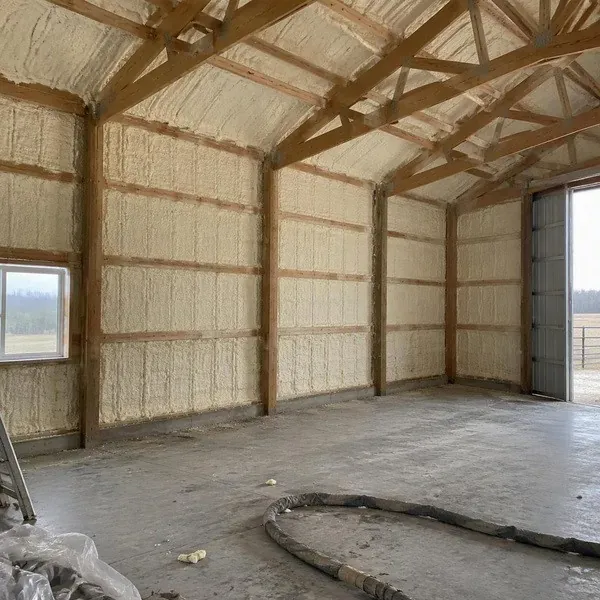
Pole Barns and Drive Sheds
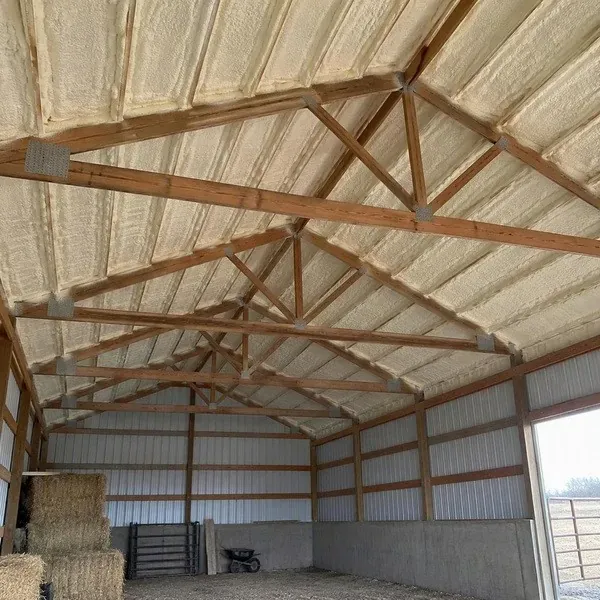
Steel cladding on purlins and girts gets foam sprayed directly to the panels. A thinner layer controls condensation, and a thicker one lets you heat the building.
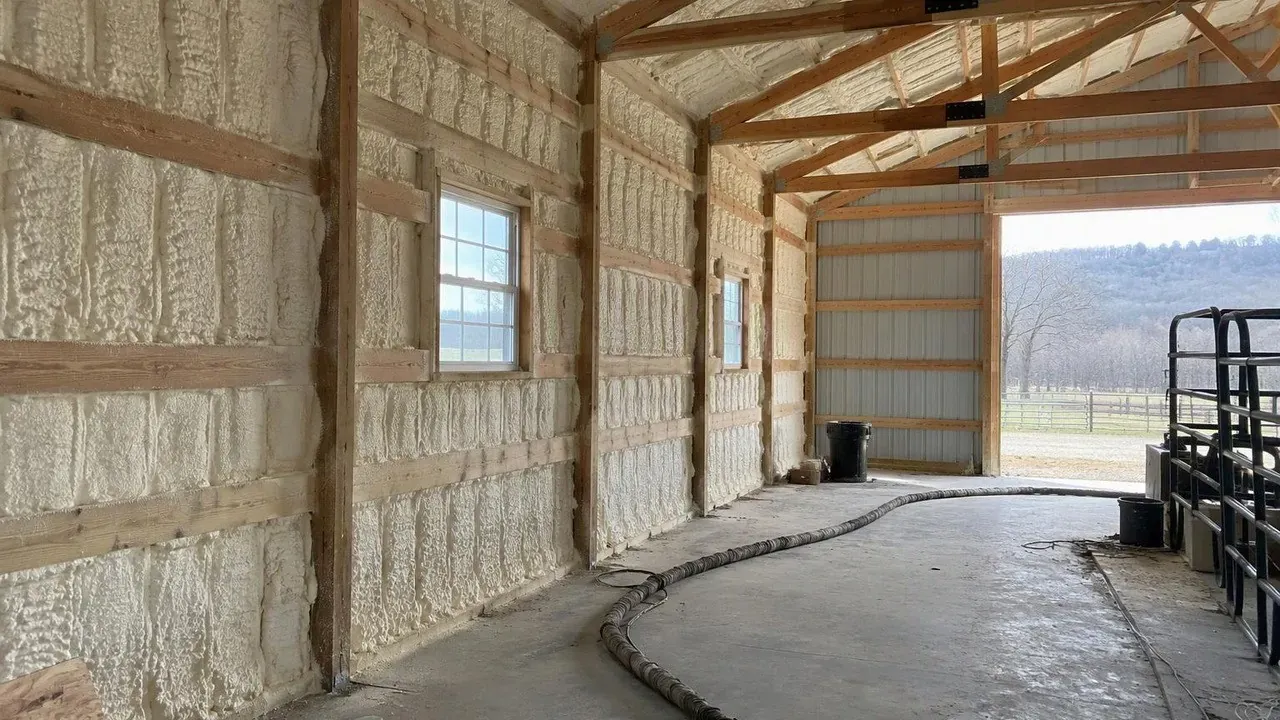
Barns, drive sheds and farm shops
Super Sprayers insulates pole barns, livestock barns, drive sheds and farm shops across Wellington County, Woolwich and the rural townships around Guelph. Farm country starts a few minutes outside our downtown Guelph shop, and agricultural buildings are a steady part of the more than 800 jobs we have finished since 2018. Our crews are CUFCA certified and WSIB covered, and we bring the spray rig right up the farm lane to the building.
Farm buildings ask a lot of insulation, more than most people expect from a shed. Steel cladding sweats every spring and fall, animals put out huge amounts of moisture and ammonia, and mice will tunnel through any batt they can reach. Closed cell spray foam bonds directly to steel and wood, seals out drafts and leaves no soft cavity for mice, sparrows or starlings to nest in.
We know that farm work runs on the season, so we schedule around planting, harvest and the weeks when animals can be moved to another barn. Whether you want a heated shop for winter repairs or just a machine shed that stops dripping on the combine, we'll size the foam to the job instead of selling the thickest option on the truck, and we'll tell you whether a coating is needed over it.
Post-frame buildings have steel cladding screwed to wood girts and purlins, with nothing but air behind it. Every temperature swing puts that steel below the dew point, and the frost or water that forms on the inside ends up on your equipment. Closed cell foam sprayed straight onto the steel stops it at the source.
The foam also stiffens the cladding, seals the lap joints and screw holes and gives birds and rodents nothing soft to pull apart. That combination is why spray foam is the most common choice for insulating an existing pole barn.
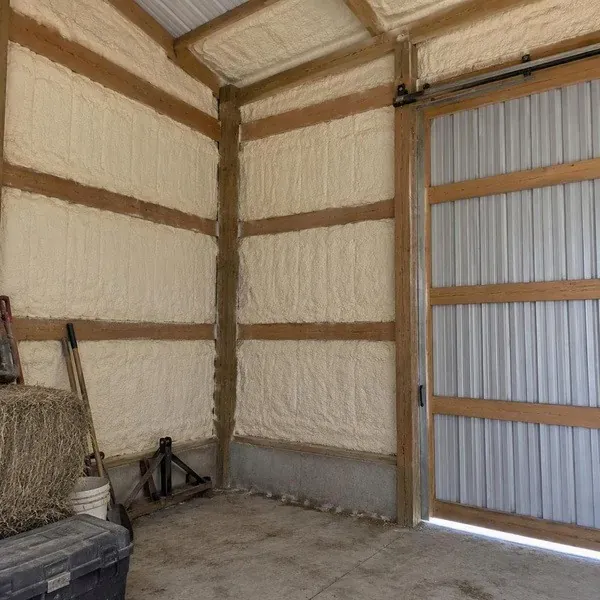
Steel cladding on purlins and girts gets foam sprayed directly to the panels. A thinner layer controls condensation, and a thicker one lets you heat the building.
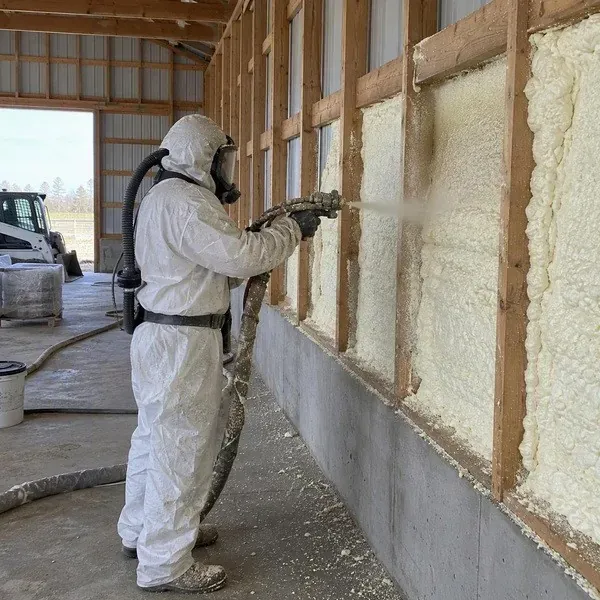
Livestock barns carry high humidity, ammonia and regular washdowns. We pair the foam with protective coatings and thermal barriers where the code or your insurer requires them. See our fireproofing page.
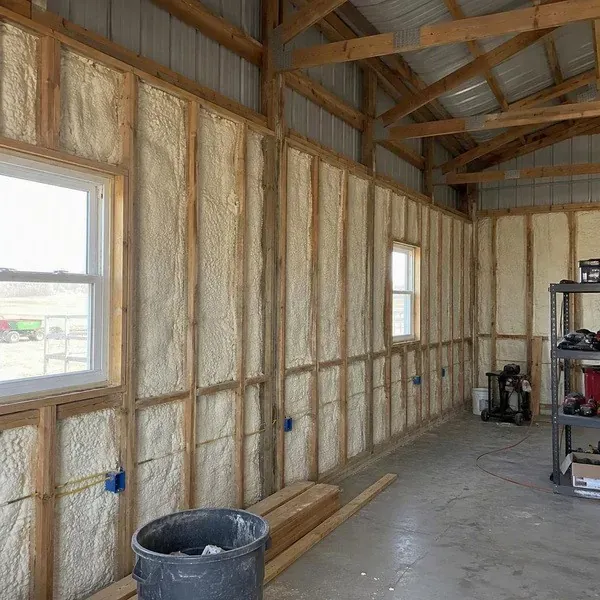
Heated shops need more R-value, and any space with welding, grinding or a heater needs a fire-rated covering over the foam. We apply that coating in the same visit.
The goal decides the thickness. Spraying more than you need wastes money, and spraying too little leaves you with a sweating roof.
| Building use | Typical closed cell thickness | Main goal |
|---|---|---|
| Cold storage or machine shed | 1 to 1.5 in | Stop condensation and drips |
| Occasionally heated shop | 2 in | Condensation control plus modest heat retention |
| Heated shop or barn | 3 in or more | Full heating with lower fuel use |
| Livestock barn | Set with your ventilation plan | Moisture control and animal comfort |
Your ventilation matters as much as the foam in a livestock barn. We'll ask about fans and air inlets before we recommend a thickness.
Late fall after harvest and the quieter weeks of winter are the easiest times to spray a farm building. Equipment, feed and stored grain need to come out or be fully covered before we start. Animals must be out of the building during spraying.
We give you a re-entry time based on the foam manufacturer's instructions and the building's ventilation. Most machine sheds are back in use the next day.
Barn quotes come down to a few measurable things:
Our spray foam cost guide includes a worked pole barn example with current per-square-foot pricing.
It depends on area and thickness, but a condensation-control layer costs far less than a full heated-shop layer. The cost guide shows current per-square-foot ranges and a worked barn example.
Yes, in almost every case. Closed cell foam sprayed directly to the steel keeps its surface above the dew point, so condensation has nowhere to form.
Birds sometimes peck at exposed foam near openings, and a determined rodent can chew it. Sealing gaps and adding a coating in reachable areas limits the damage, and our pests guide explains more.
Free estimate
Tell us the building size, how you use it and whether you plan to heat it. We'll come out, measure and give you a written price.