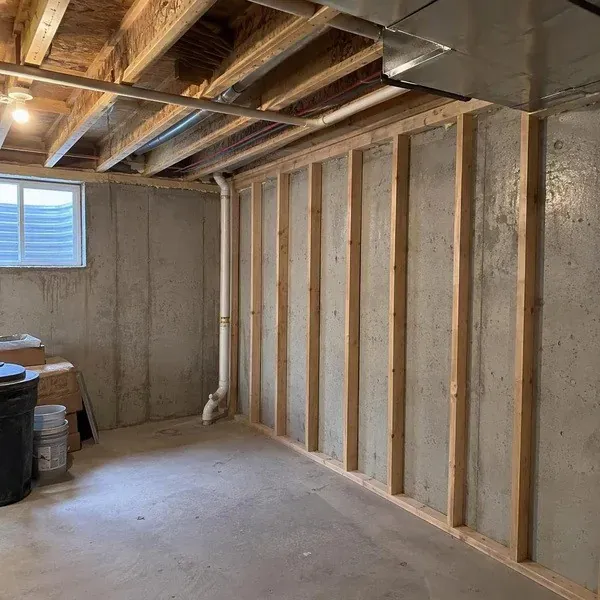
Poured Concrete Walls
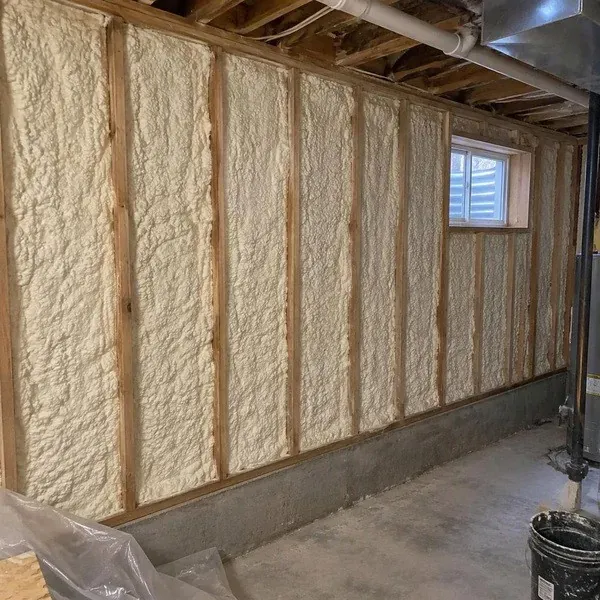
The most common foundation in homes built since the 1960s. We clean off dust and form oil, check for cracks and spray directly to the concrete.
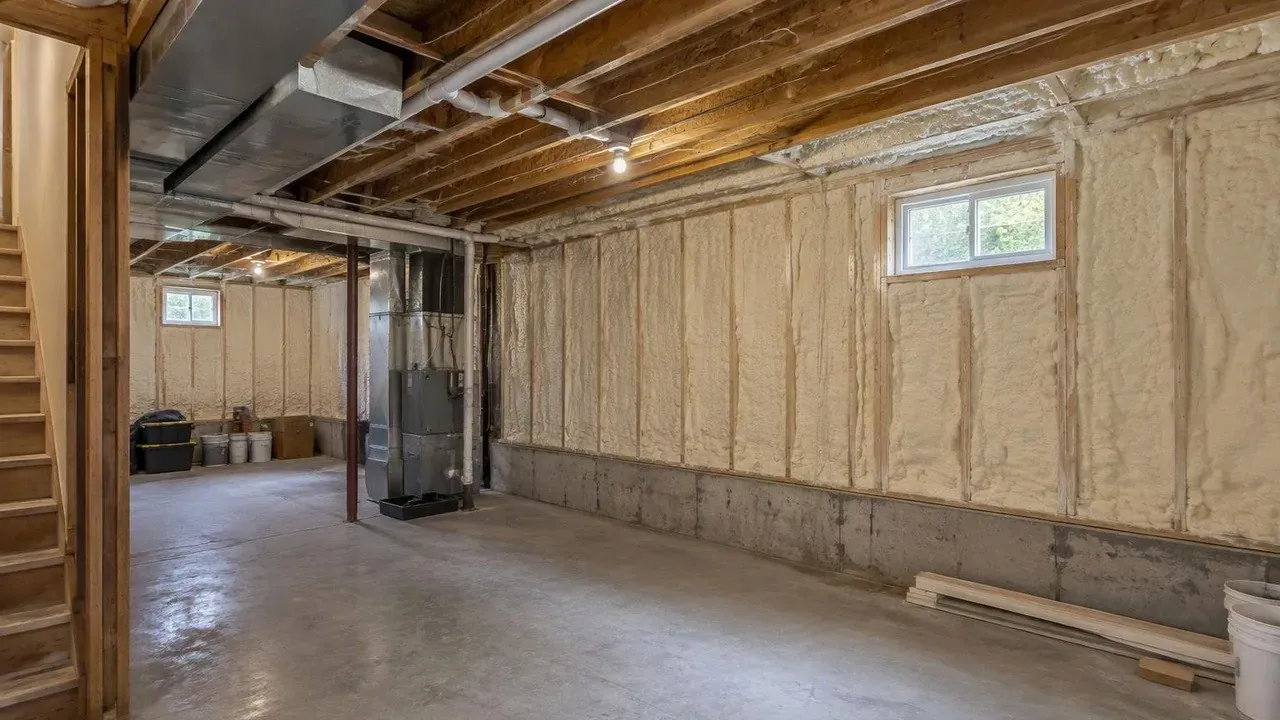
Concrete, block, wood and stone foundations
Super Sprayers insulates basements across Guelph, from fieldstone cellars under century homes near Exhibition Park to poured concrete foundations in Westminster Woods and the new streets of the south end. Basements are one of the most common jobs among the more than 800 we have completed since 2018, because they are where Ontario houses lose a surprising amount of heat. A bare concrete wall below grade is cold, damp to the touch and a direct path for heat to escape into the ground.
Closed cell spray foam is our standard for basement walls. It bonds directly to concrete, block, wood or parged stone, stops the condensation that makes basements smell musty and acts as the vapour barrier at about 2 inches, so there is no plastic sheet trapping moisture behind the drywall. We usually seal the rim joists in the same visit, since they are the leakiest part of the foundation.
Whether you are finishing a basement for the first time, building a legal basement apartment or just want warmer floors upstairs, this page explains how the job works for each type of foundation. Our installers are CUFCA certified, WSIB covered and follow the CAN/ULC-S705 installation standard, and every basement job carries our 2-year labour warranty.
Closed cell foam is sprayed directly against the inside face of the foundation wall, usually 2 to 3 inches thick. Because it bonds to the concrete, there's no air gap where humid basement air can reach the cold wall and condense. That single change ends most basement mustiness.
We can spray before or after the stud walls go up. Spraying first and framing after gives a continuous layer with no studs interrupting it, while spraying between existing studs works when the framing is already in place.
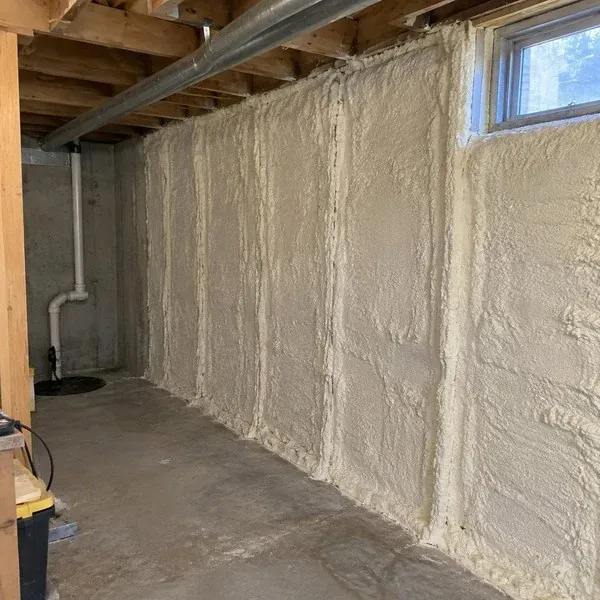
Guelph has every kind of foundation, and each one needs a slightly different approach.
The most common foundation in homes built since the 1960s. We clean off dust and form oil, check for cracks and spray directly to the concrete.
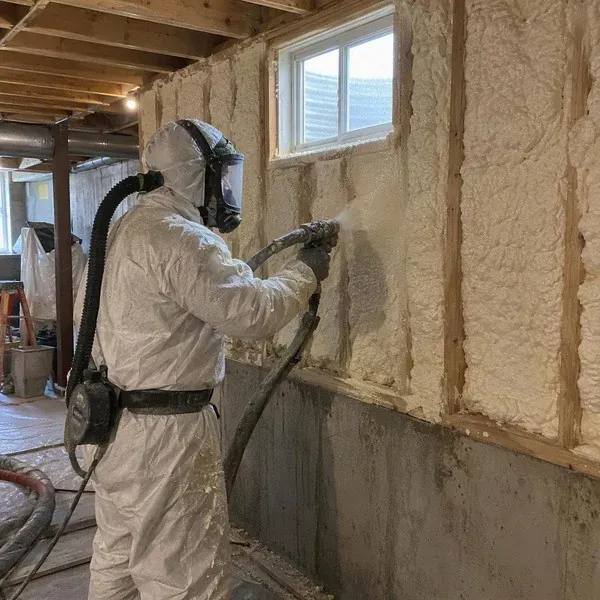
Block walls have hollow cores and often show white efflorescence where water moves through. Active leaks have to be fixed from outside first, then foam seals the face of the block.
Treated wood foundation walls are framed like above-grade walls. We seal the plywood seams and fill the stud bays, keeping in mind the wall's different moisture profile.
Common under older Guelph homes. Stone walls move water and air through their joints, so parging, drainage and a drying plan come first. Our older and stone homes guide explains when foam is suitable.
The old way of finishing a basement was batts against the concrete with plastic over the studs. Humid air slipped behind the plastic, hit the cold wall and condensed, and the batts held the water against the wood. We tear out a lot of mouldy basements built that way.
Closed cell foam removes the cold surface, so condensation can't form. It is not a fix for liquid water, though. Leaking cracks, poor grading and blocked weeping tile must be dealt with before any insulation goes on.
Not with closed cell foam at the right thickness. About 2 inches of medium density foam meets the Ontario Building Code's vapour barrier requirement on its own, so no polyethylene sheet is needed. Adding plastic over foam can actually trap moisture between two barriers.
Open cell foam and batts are different. Both need a separate vapour barrier, which is one reason we don't use them against foundation walls.
If the basement smells musty or the drywall is stained at the bottom, the old insulation is likely wet. Removing it lets us inspect the wall, spray foam and hand back a clean shell for new drywall.
Unfinished areas such as furnace rooms, cold cellars and under stairs can often be sprayed on their own. Rim joists are usually reachable from the furnace room even in finished basements.
Spray foam in a finished basement must be covered by a thermal barrier, which in practice means 1/2 inch drywall. In unfinished storage or mechanical rooms where drywall isn't practical, an approved intumescent coating such as DC315 can protect the foam instead. Our Ontario Building Code guide covers the full requirements.
At 2 inches of closed cell foam, basement walls typically cost about $3.30 to $5.30 per square foot in 2026. Wall height, prep, the removal of old insulation and whether rim joists are included all affect the final number. The spray foam cost guide has a full basement example.
Only where the walls are open. Most finished basements need the drywall and old insulation removed first, although rim joists can often be done from the furnace room.
Two inches of closed cell is a common minimum because it meets the vapour barrier requirement. Many owners choose 2.5 to 3 inches for extra R-value.
No. Foam stops condensation, not liquid water. Leaks must be repaired from outside or with an interior drainage system before insulating.
Yes, as long as the concrete is clean, dry and above the foam's minimum temperature. That direct contact is exactly what stops condensation.
Free estimate
Tell us the foundation type, rough wall length and whether you plan to finish the space. We'll check for moisture before we quote.