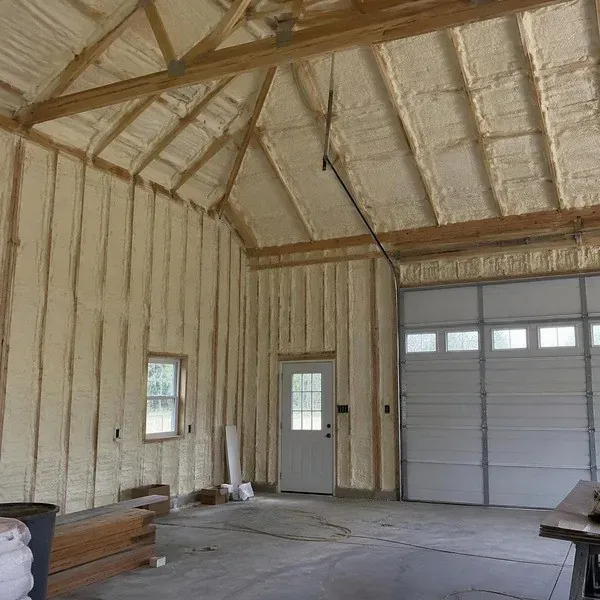
Heated workshop
If you'll run a heater all winter, insulate the walls and ceiling fully. Closed cell at 2 to 3 inches or open cell in deeper framing keeps heating costs reasonable and makes the space usable year-round.
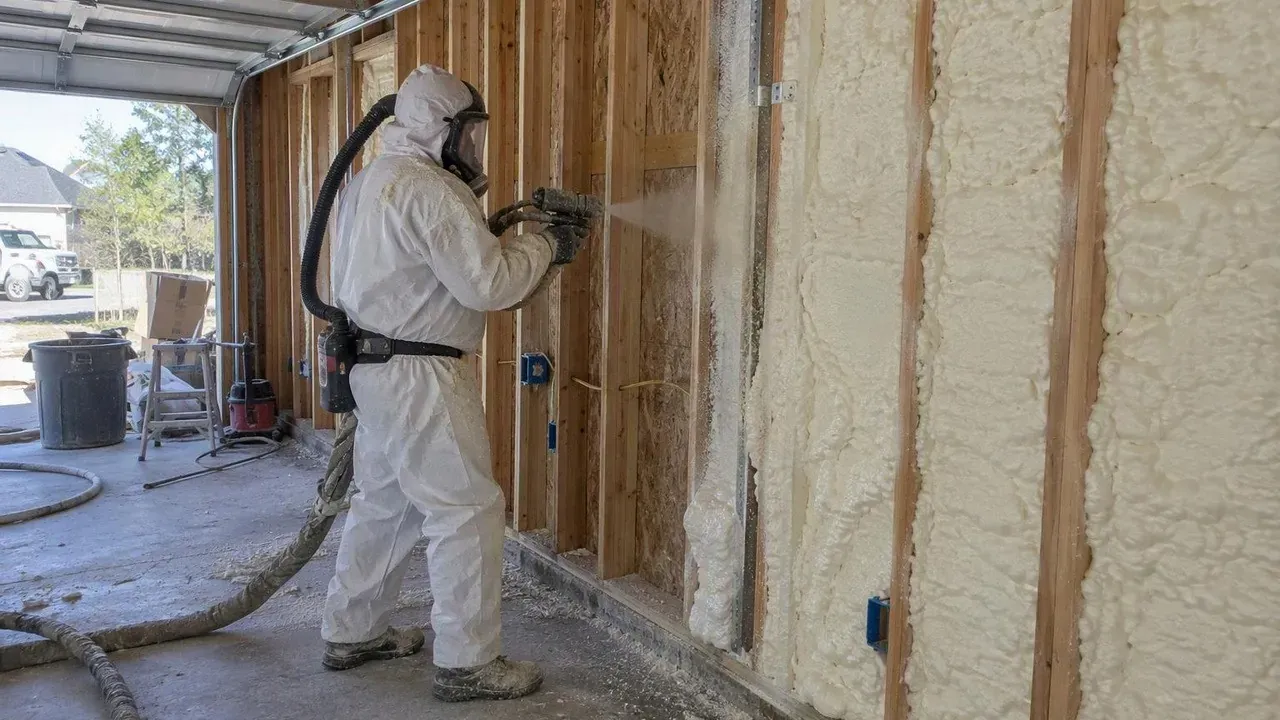
Attached garages, detached garages and shops
Super Sprayers insulates attached garages, detached garages and backyard workshops across Guelph and the surrounding towns. Since 2018 our certified crews have completed more than 800 spray foam jobs, and garages come up constantly, usually because someone wants to work on a car in January or because the bedroom over the garage is the coldest room in the house. Those are two different problems, and they need two different solutions.
An attached garage in a newer Guelph subdivision is usually drywalled with thin batts in the walls and ceiling, and it shares a wall and often a floor with the house. A detached garage or shop on a rural lot might be bare studs and a steel roof with no insulation at all. What you plan to do in the space decides how much foam you need and where it goes.
Spray foam works well in garages because it fills around the odd framing, seals the gaps where cold air and exhaust sneak in and adds rigidity to thin walls. Our installers are CUFCA certified, WSIB covered and follow the CAN/ULC-S705 installation standard, and we'll explain exactly what drywall or coating the building code expects over the foam before you commit.
If you'll run a heater all winter, insulate the walls and ceiling fully. Closed cell at 2 to 3 inches or open cell in deeper framing keeps heating costs reasonable and makes the space usable year-round.
For a garage that stays cold, a thin closed cell layer controls condensation and drafts. It protects stored tools and vehicles without paying for R-value you won't use.
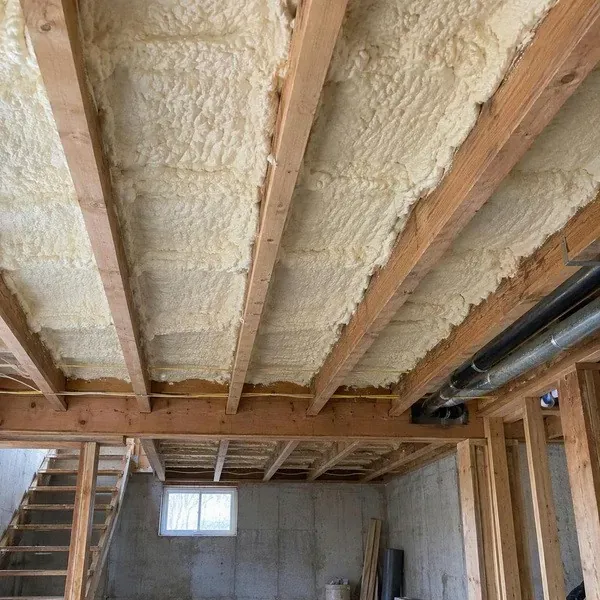
A bedroom or bonus room above an attached garage sits on a floor that is exposed to garage air. Batts in that ceiling sag, leave gaps and let cold air wash under the floor. The room above never warms up.
Closed cell foam sprayed to the underside of the subfloor seals and insulates in one pass. It also helps keep garage exhaust out of the house, which the building code expects of the wall and ceiling between them. The between-floor insulation page covers this in detail.
Walls are straightforward. We spray the stud bays and trim the foam flush, ready for drywall or plywood. The wall shared with the house gets full attention because it's part of the separation between the garage and your living space.
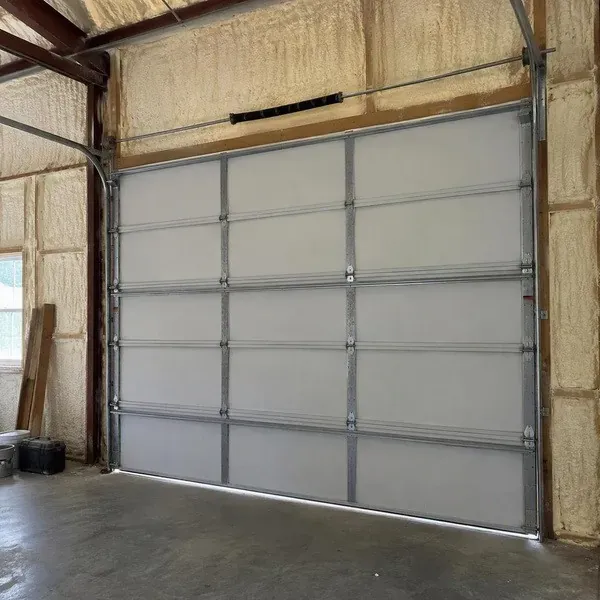
We don't spray the overhead door itself. Foam adds weight that throws off the springs and opener, and the panels flex every time the door moves. An insulated replacement door or a door insulation kit is the better route.
Detached garages range from wood-framed buildings that insulate like a small house to steel-clad shops that sweat like a barn. For steel buildings, our metal building insulation page explains how we spray directly to the cladding. Wood-framed shops get the same treatment as an attached garage.
These are typical 2026 ranges for walls and ceiling in closed cell at 2 inches, before drywall. Heated shops with thicker foam cost more.
| Garage size | Walls and ceiling | Ceiling only |
|---|---|---|
| 20 x 20 ft | About $3,100 to $4,900 | About $1,300 to $2,100 |
| 24 x 24 ft | About $4,100 to $6,500 | About $1,900 to $3,100 |
| Ceiling under a bonus room | Not applicable | Quoted by area and access |
Ranges assume 8 ft walls less the overhead door opening. See the spray foam cost guide for how board feet are calculated.
About $3,100 to $4,900 for walls and ceiling at 2 inches of closed cell, before drywall. A ceiling-only job under a bonus room costs much less.
We don't recommend it. The added weight strains the springs and opener, and the foam cracks as the panels flex.
In an attached garage, yes, the foam needs a thermal barrier, and the wall and ceiling to the house need to meet the code's separation requirements. Detached garages may allow a coating instead, which we can apply.
Free estimate
Send the garage size, whether it's attached or detached and how you plan to use it.