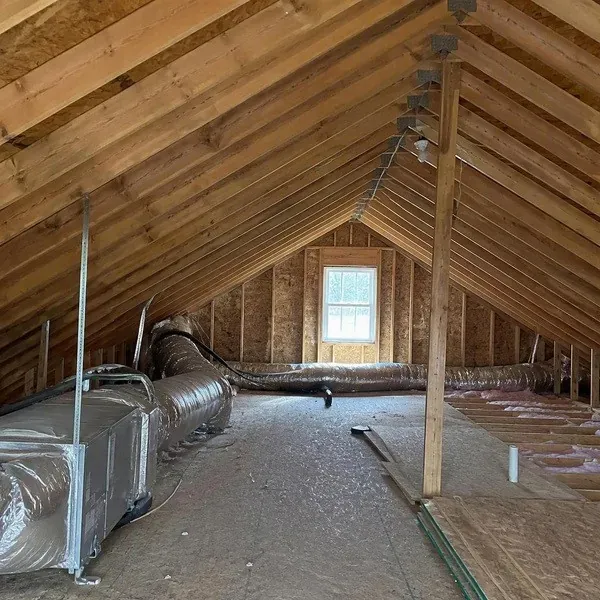
Attic sheathing
Warm air leaking through top plates, pot lights and the hatch condenses on the cold roof deck. Bath fans venting into the attic make it worse.
Attics, basements and crawl spaces
Super Sprayers removes mould from attics, basements and crawl spaces in homes across Guelph and the surrounding towns, and then fixes the reason it grew in the first place. Since 2018 we have completed more than 800 insulation jobs, and an insulation company sees more hidden mould than almost anyone, because we are the ones pulling back old batts and looking at the wood behind them. In nearly every case, the mould is a symptom of a moisture problem that an insulation or air sealing fix can solve.
In attics, mould usually grows on the roof sheathing because warm, humid air is leaking up from the house or a bathroom fan is venting into the attic instead of outdoors. In basements, it grows behind plastic and batts where humid air meets cold concrete. Remove the mould without fixing either cause, and it comes back within a winter or two.
Our remediation follows recognized practice, including containment, HEPA filtration and removal of damaged porous materials, with reference to the IICRC S520 standard and Health Canada guidance. Our crews are WSIB covered and insured, and because we also air seal and insulate, we can fix the mould, the moisture and the insulation in one coordinated job.
Warm air leaking through top plates, pot lights and the hatch condenses on the cold roof deck. Bath fans venting into the attic make it worse.
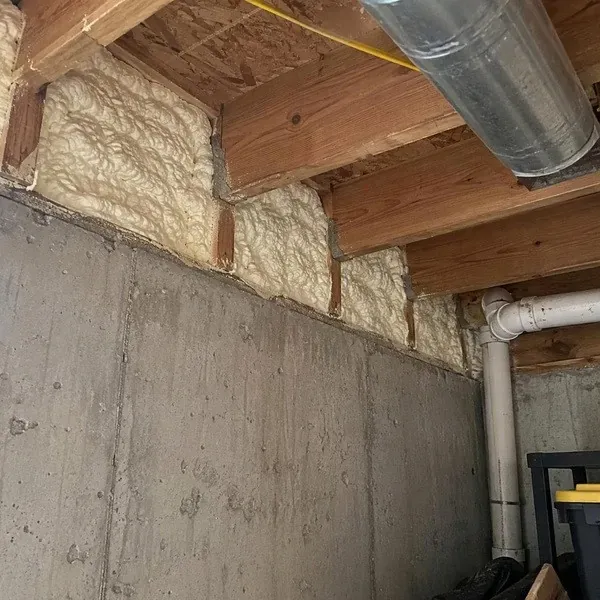
Humid basement air reaches the cold wood behind loose batts and condenses there, often for years before anyone notices.
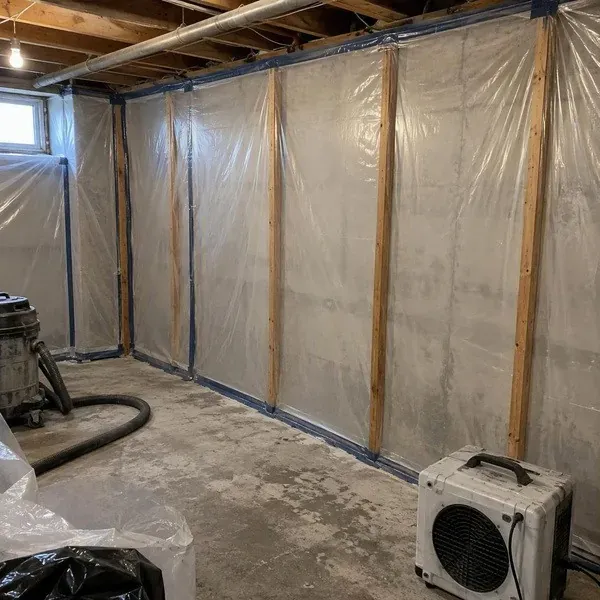
The old batt-and-poly finish traps moisture against concrete. Mould grows on the studs and the back of the drywall.
Mould needs moisture, and removing the moisture is the only lasting fix. We track down the source before any cleanup starts. In attics it's usually air leaks or bath fans, and in basements it's condensation, leaks or high humidity.
If the source is a roof leak, foundation crack or plumbing problem, we'll tell you so it can be repaired by the right trade before we remediate.
Assess
We inspect the extent of growth and find the moisture source.
Contain
Poly barriers and negative air with HEPA filtration keep spores out of the rest of the house.
Remove porous materials
Mouldy insulation, drywall and other porous materials are bagged and removed.
Clean surfaces
Framing and sheathing are HEPA-vacuumed and cleaned; stains may remain even when growth is gone.
Dry and verify
The area is dried and visually checked before rebuilding.
Health Canada recommends professional help for mould areas larger than about 1 square metre, or where the mould keeps returning.
Prevention is where our insulation work comes in. We air seal the attic floor so warm air stops reaching the roof deck, and make sure bath fans vent outdoors. In basements, closed cell foam against the concrete removes the cold surface where condensation forms.
Crawl spaces get sealed ground covers and insulated walls. See our air sealing and basement spray foam pages for the details.
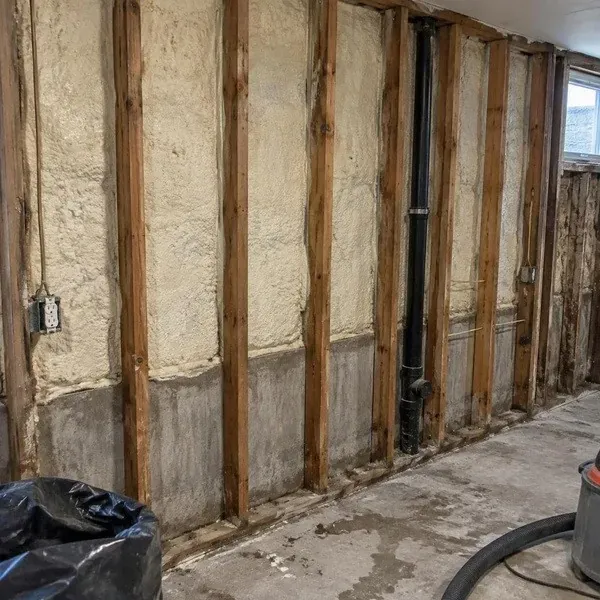
A common worry is that spray foam traps moisture and hides mould. Properly installed closed cell foam bonded to a dry surface leaves no gap for air to reach and condense, so mould has nothing to feed on. Problems happen when foam is sprayed over wet or already mouldy material, or when a liquid leak is covered instead of fixed.
Our guide on whether spray foam is safe covers this in more depth.
Paint doesn't fix the moisture that feeds the mould, so it grows back. The source has to be fixed and the growth cleaned first.
Insulation alone won't. Air sealing and proper venting stop the moisture, and the insulation then keeps surfaces warm.
Any mould can affect people with allergies or asthma, and colour doesn't reliably indicate the type. Larger areas should be handled by professionals with containment.
Free estimate
Tell us where you've seen mould and how large the area is. Photos help us plan containment.