Spray foam
Large and irregular gaps, rim joists and top plates.
Stop drafts at the source
Super Sprayers finds and seals the air leaks that make houses drafty across Guelph, Kitchener, Waterloo and the surrounding towns. Since 2018 our certified crews have completed more than 800 insulation jobs, and on most of them the biggest improvement came from sealing leaks rather than from adding insulation. In many older homes, the air leaking in and out through small gaps costs more heat every winter than the missing insulation does.
Air leaks are hard to find because they hide in places nobody looks: behind the attic hatch trim, around pot lights, at the top of interior walls, along plumbing and chimney chases and where the house sits on its foundation. Warm air escapes through the top of the house, cold air is pulled in at the bottom to replace it, and the result is cold floors, drafts at outlets and a furnace that seems to run constantly.
Our crews seal those leaks with the right material for each gap, from spray foam and low-expansion foam to fire-rated sealant and sheet metal at chimneys. We are CUFCA certified, WSIB covered and follow the CAN/ULC-S705 installation standard for all foam work, and we'll also talk honestly about ventilation, because a tighter house needs a plan for fresh air.
| Leak point | How we fix it |
|---|---|
| Attic hatch | Weatherstrip and rigid foam insulated cover |
| Top plates of interior walls | Spray foam from the attic side |
| Pot lights | Airtight covers or sealed IC-rated fixtures |
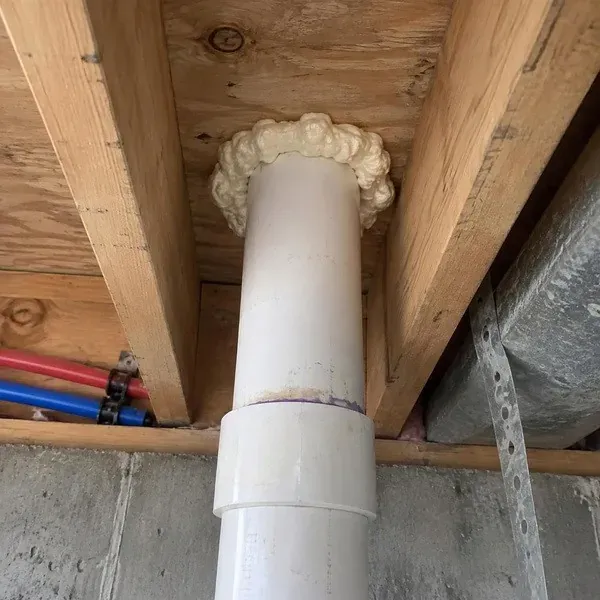
| Plumbing and wiring holes | Spray foam or low-expansion foam |
| Chimney and flue chases | Sheet metal and fire-rated sealant |
| Rim joists | Closed cell spray foam |
| Bath and kitchen fans | Sealed housings and ducts vented outside |
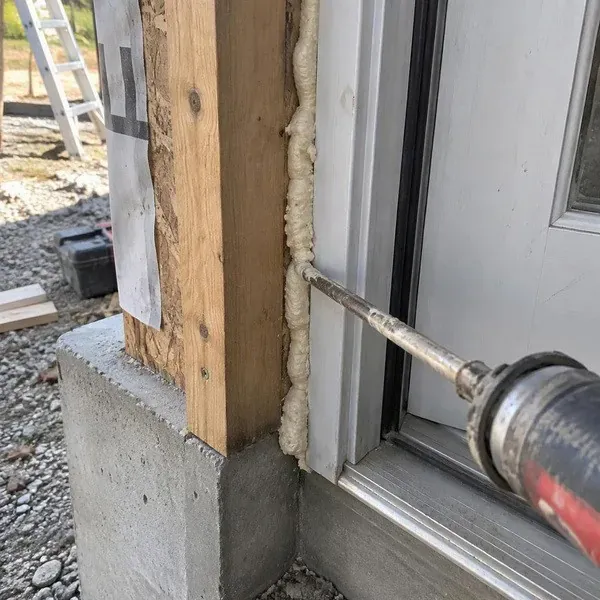
| Window and door frames | Low-expansion foam and sealant |
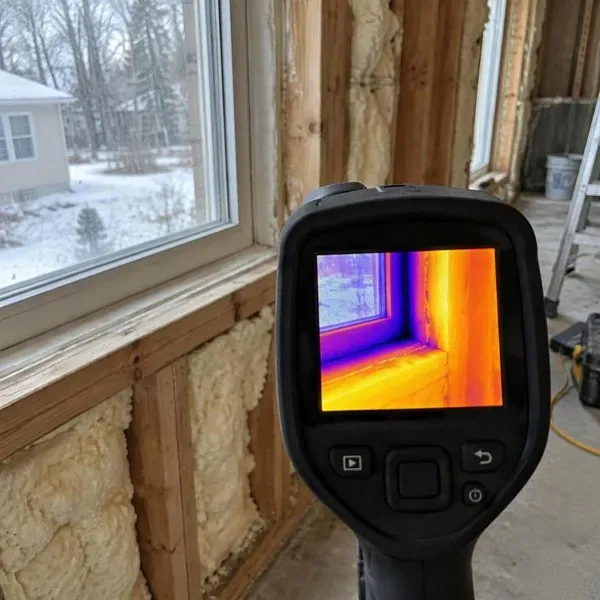
We use a thermal imaging camera to see cold air streaking in around windows, outlets and ceilings, and smoke pencils to confirm leaks at specific gaps. In the attic, dirty or darkened insulation often marks where warm air has been filtering through for years.
A blower door test depressurizes the house to exaggerate every leak and measure overall airtightness. Where a measured before-and-after result is needed, for example for a rebate, it's done by a registered energy advisor. See our home energy audit page for how that works.
Large and irregular gaps, rim joists and top plates.
Window and door frames, where regular foam could bow the frame.
Chimneys, flues and anywhere near heat.
Attic hatches and doors that open and close.
Insulation slows heat moving through a surface, but it does very little to stop air moving through a gap. Blowing new insulation over leaky top plates buries the leaks where nobody will ever seal them. That's why every attic job we do starts with air sealing.
Sealing first also protects the insulation, because moist indoor air leaking into an attic is what dampens insulation and frosts the roof deck.
A tighter house holds moisture and cooking smells longer, so fresh air has to come from a controlled source. Most newer homes have an HRV or ERV that handles this. Older homes rely on bath and kitchen fans, which must vent outdoors, not into the attic.
Fuel-burning appliances such as older furnaces, water heaters and fireplaces need enough combustion air and a working exhaust. If your home has natural-draft appliances, have them checked before and after major air sealing. Working carbon monoxide alarms are essential either way.
A house can't be too airtight if it is also properly ventilated. The risk comes from sealing without a plan for fresh air and combustion safety.
Often, yes. It's one of the lowest-cost upgrades and usually the first we recommend, especially in the attic and at the rim joists.
Air sealing can be part of a multi-measure rebate under the Home Renovation Savings Program when a registered energy advisor assesses the home. Our rebates guide has the details.
Free estimate
Tell us where you feel drafts and how old the house is. We'll find the leaks and quote the fixes.