The questions other companies avoid
Is Spray Foam Insulation Safe? Honest Answers for Ontario Homeowners
If you've searched for spray foam insulation, you've probably also read stories about foam that smelled for months, houses that had to be stripped back to the studs and homeowners who couldn't sell. Those stories are real, and we've been called in to clean up after some of them. They're also almost always the result of how the foam was installed, not a problem with properly cured foam itself.
Spray foam is made on site by mixing two liquid chemicals at the spray gun. While it's being sprayed and curing, it releases chemicals that require protective equipment and ventilation, and nobody should be in the house, but once it has cured properly it's an inert, stable plastic. The risk lives in the gap between those two states, in the mixing, the thickness of each pass and the conditions on site.
At Super Sprayers we'd rather you understand the risks than find out the hard way. This guide covers why some people remove spray foam, what off-gassing and odour really are, how long foam takes to cure, how it interacts with moisture and mould, what lenders and home inspectors think, and when we'd recommend something else entirely, even though spray foam is the service we're best known for.
- In business since 2018
- 800+ jobs completed
- WSIB covered, licensed and insured
- 2-year labour warranty
- 5-star Google rating
Why Some People Are Removing Spray Foam
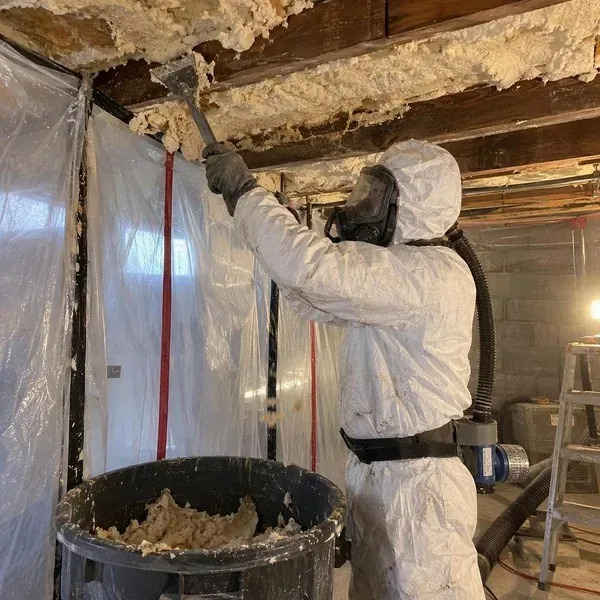
When we're called to remove foam, the cause is almost always one of these installation failures.
- Off-ratio mixing: the two chemicals weren't mixed in the right proportion, leaving foam that stays soft, sticky or smelly
- Over-thick lifts: foam sprayed too thick in one pass overheats, shrinks, cracks or gives off a lingering odour
- Wrong foam in the wrong place: open cell below grade or against cold steel, where it traps moisture
- Bad conditions: foam sprayed onto a cold, wet or dirty surface that later peels away
- No ventilation plan: occupants returning too soon, before the space was cleared
Off-Gassing, Odour and Re-Occupancy
During spraying and for a short time afterward, the foam releases chemicals, including isocyanates, that can irritate the lungs, eyes and skin. That's why installers wear full respirators and why the house is vacated and ventilated. Re-occupancy times are set by the foam manufacturer, commonly 24 hours for closed cell.
A mild smell that fades within a day or two is normal. A strong fishy, ammonia or chemical odour that lasts for weeks is not, and it usually points to an off-ratio mix.
How Long Spray Foam Takes to Cure
Closed cell foam is tack-free within minutes and firm enough to trim within an hour or so. It is substantially cured within about a day, which is why re-occupancy times are typically around 24 hours. Open cell cures on a similar timeline.
Curing continues slowly for a little while after that, but the foam's properties and emissions are settled once the manufacturer's re-occupancy time has passed and the space has been ventilated.
How Certified Installation Prevents Problems
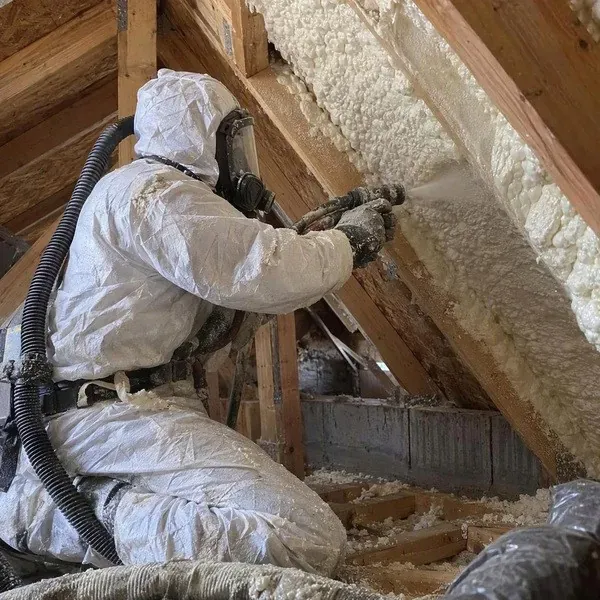
The CAN/ULC-S705.2 installation standard exists precisely to prevent the failures above. It requires installers to check and record site and surface temperatures, chemical temperatures and pressures, daily test sprays, adhesion and the thickness of each pass. It also requires a written job record.
See our certifications page for what we check on every job, and ask any contractor you're considering whether they work to S705.2.
Moisture and Mould: When Foam Helps and When It Hides Leaks
Closed cell foam bonded to a dry surface prevents condensation, which is one of the main causes of mould in basements and attics. In that sense it reduces mould risk. The problem comes when foam is sprayed over a surface that's already wet or leaking.
Foam doesn't fix liquid water. A roof leak, plumbing leak or foundation crack hidden behind foam can do damage before anyone notices, which is why we fix leaks first.
Mortgages, Home Sales and Inspections
Concerns about lenders refusing homes with spray foam come mostly from the United Kingdom, where some lenders and surveyors have been cautious about foam sprayed under roof tiles. That caution hasn't carried over in the same way to Ontario, where spray foam is a standard, code-recognized insulation. Still, lender and insurer policies change.
The best protection is documentation. Keep the job record, product data sheets and warranty from your installer, so a buyer's inspector can see what was installed and how. If you're buying or selling, check with your lender or real estate agent directly.
When We Recommend Something Other Than Spray Foam
- Vented attic floors, where air sealing plus blown-in is better value
- Walls with knob-and-tube wiring, until an electrician replaces it
- Wet foundations, until drainage and leaks are fixed
- Solid stone walls without a moisture plan
- Anyone who strongly prefers a vapour-open wall assembly
Safety Questions
Can I stay in my house during installation?
No. Everyone, including pets, stays out during spraying and until the manufacturer's re-occupancy time has passed, commonly 24 hours for closed cell.
What does badly installed spray foam smell like?
Often a strong fishy, ammonia-like or sharp chemical smell that doesn't fade after a few days. If you notice that, have the foam assessed.
Does cured spray foam cause health problems?
Properly mixed and cured foam is an inert plastic, and health concerns relate mainly to exposure during spraying and curing. Problems after curing usually trace back to an off-ratio install.
Related Services and Guides
- Certifications and Insurance CUFCA, S705, Carboline, WSIB and full insurance.
- Insulation Removal Old, wet or rodent-soiled insulation vacuumed out.
- Mould Removal Remove the mould and fix the moisture behind it.
- Ontario Building Code and Spray Foam Thermal barriers, vapour barriers, permits and standards.
Free estimate
Talk to a Certified Installer
Worried about foam already in your home, or about a project you're planning? Call or send a note and we'll answer honestly.
- Call or text226-780-8752
- Emailinfo@supersprayers.ca
- Mon to Sat: 7:00am to 9:00pmSun: 9:00am to 6:00pm