Vented attics
With no ducts or equipment in the attic, sealing the floor and blowing in insulation performs as well as foam at the roofline for much less money.
The right tool for vented attics
Super Sprayers installs blown-in cellulose and fiberglass insulation in attics and closed walls across Guelph and the surrounding towns. We are a spray foam company, but we are also honest about where foam isn't the best value, and a vented attic floor is the clearest example. Since 2018 we have completed more than 800 insulation jobs, and many of the attic upgrades we recommend combine a spray foam air seal with a deep layer of loose fill on top.
Blown-in insulation is fast, affordable and very good at covering an attic floor evenly, including around the joists, wires and odd framing that batts never fit. Cellulose is made mostly from recycled paper treated with borates for fire and pest resistance, while blown fiberglass is lighter and inert. Both reach the R-60 target for Ontario attics at a fraction of the cost of spraying the roofline.
The part most companies skip is sealing the attic floor first. Without it, warm air keeps leaking through the new insulation, and the ice dams and frosty nails come back. Our crews seal the leaks with spray foam, install baffles and dams, then blow the insulation and mark the depth so you can check it yourself.
With no ducts or equipment in the attic, sealing the floor and blowing in insulation performs as well as foam at the roofline for much less money.
Loose fill gives the most R-value per dollar of any insulation we install.
Once the leaks are sealed, new insulation can go right over dry, clean old insulation to bring the depth up.
| Factor | Cellulose | Blown fiberglass |
|---|---|---|
| R-value per inch | About R-3.5 to R-3.8 | About R-2.5 to R-3.2 |
| Settling | Settles a little; installed depth accounts for it | Settles very little |
| Recycled content | High (paper) | Moderate (glass) |
| Fire and pest treatment | Borate treated | Inherently non-combustible |
| Air flow resistance | Better | Lower |
| Dust during install | More | Less |
| Moisture | Absorbs moisture if wet | Does not absorb but loses R-value when wet |
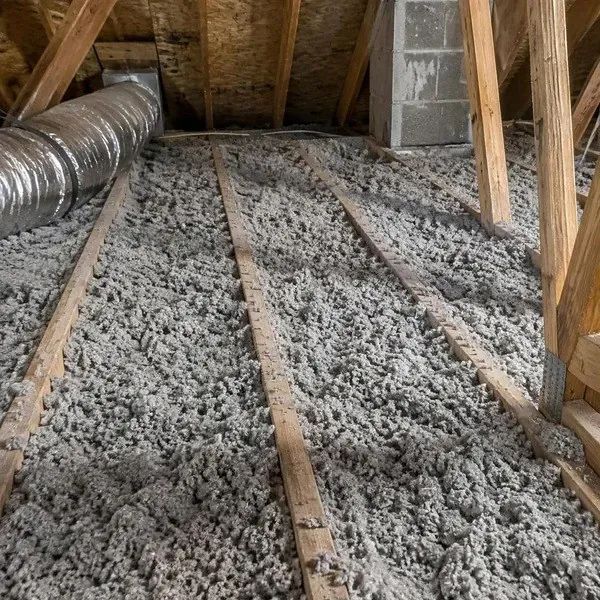
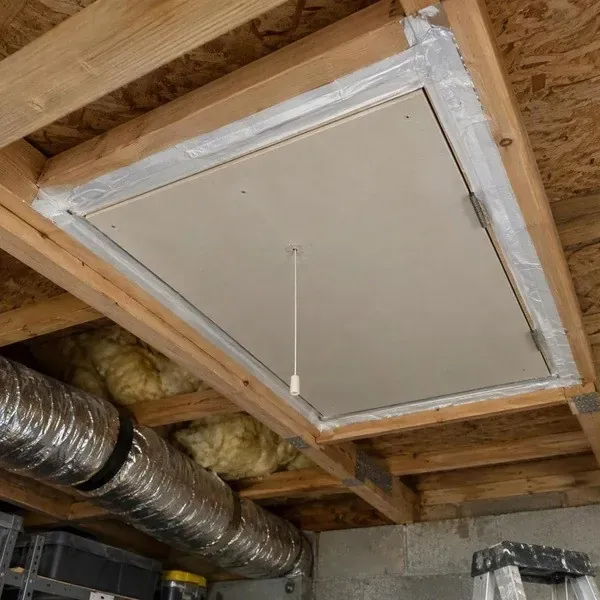
Before any loose fill goes in, we seal the top plates, plumbing and wiring holes, bath fan housings and the attic hatch. Pot lights get covered with airtight boxes unless they are IC-rated and airtight. Baffles go in at every soffit so the new insulation doesn't block roof ventilation.
Chimneys and flues get a non-combustible dam to keep insulation at the required clearance. Our air sealing page explains the leak points in detail.
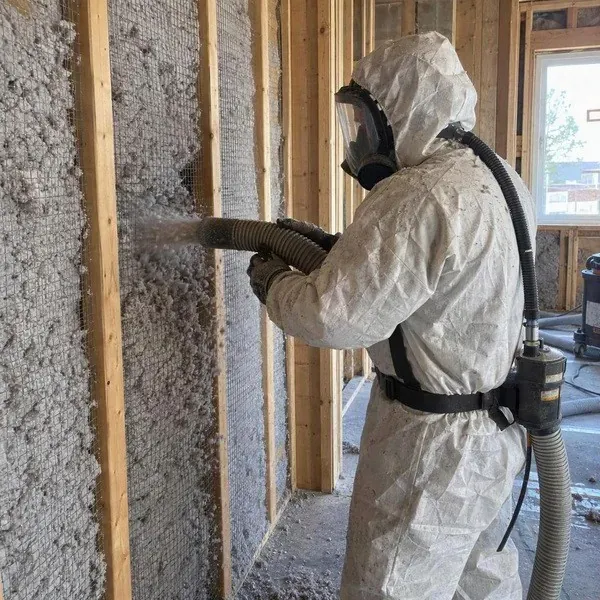
Cellulose blown at high density into a closed cavity packs tightly enough that it won't settle. It is a good way to fill closed walls and sloped ceilings in older homes through a few holes per bay. In open framing, a mesh fabric holds the cellulose in place until drywall goes on.
For a comparison with injection foam, see our injection foam page.
R-60 needs roughly 16 to 17 inches of cellulose or about 20 to 22 inches of blown fiberglass, depending on the product. We staple depth rulers to the trusses across the attic so the depth is visible from the hatch. You also get an attic card showing the product, the number of bags and the installed R-value.
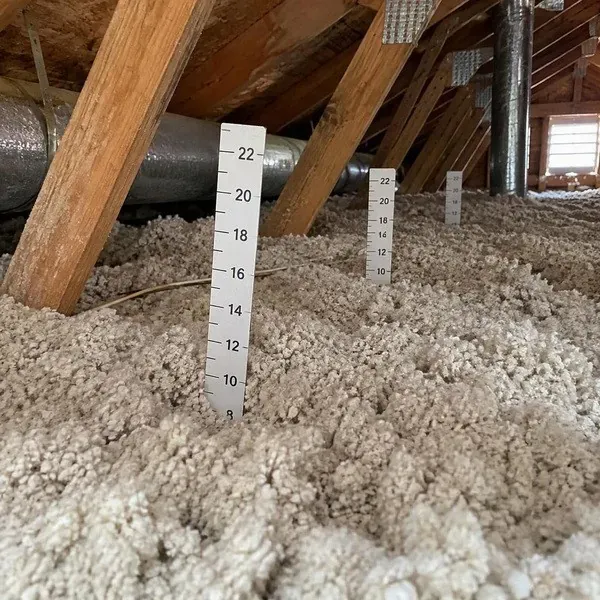
About 16 to 17 inches of cellulose or 20 to 22 inches of fiberglass to reach R-60. The exact depth comes from the product's coverage chart.
Cellulose settles slightly, and the chart depth already allows for it. Blown fiberglass settles very little.
It is borate treated and safe around modern wiring. Pot lights must be IC-rated or boxed, and we keep insulation clear of chimneys with a metal dam.
Free estimate
Tell us your attic size or the home's footprint and roughly how deep the current insulation is.